Best AI Image Generators 2026: Midjourney vs DALL-E vs Stable Diffusion
Best AI Image Generators 2026: Midjourney vs DALL-E vs Stable Diffusion
AI Image Generators have revolutionized digital art in 2026. If you want to master these powerful tools for stunning visuals, this guide is exactly what you need. Powered by advanced deep learning, these platforms can create photorealistic images from simple text prompts. Using them, you can generate professional artwork without any prior graphic design skills. This technological shift is rapidly changing how creators produce content for websites, social media, and marketing campaigns.
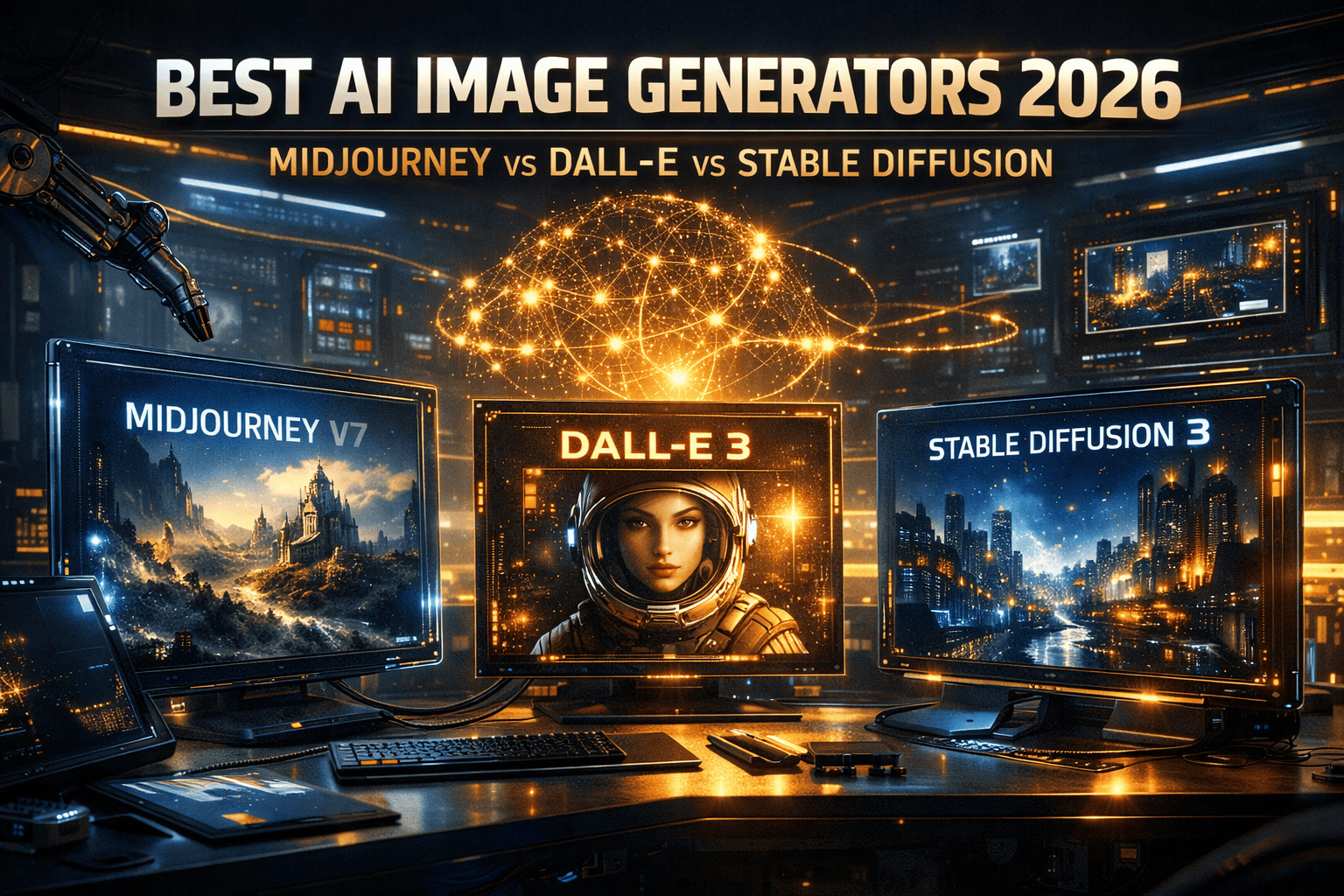
This guide compares the top three platforms dominating the market today: Midjourney V7, DALL-E 3, and Stable Diffusion 3. As highlighted by Google Search Central, creating original and helpful content is the most professional way to engage your audience and scale your digital presence.

The future of digital art with advanced artificial intelligence.
Why AI Image Generators Are Essential in 2026
The primary reason to adopt these tools is the incredible combination of speed and boundless creativity. In 2026, those who don’t utilize AI will likely struggle to keep up with the massive demand for visual content. Modern software allows you to conceptualize and finalize professional-grade graphics in seconds instead of hours.

The true beauty of the best AI Image Generators is that they handle complex artistic techniques—like lighting, shading, and perspective—while you focus entirely on your creative vision. Whether you need a futuristic landscape for a sci-fi blog or a minimalist icon for a new app, data-driven platforms give us the exact aesthetic we need for any project.
Pros and Cons: Is AI Art Right for You?
Before diving headfirst into prompt engineering, it is important to weigh the strengths and challenges of this technology. These platforms offer incredible opportunities, but understanding both sides will help you set realistic expectations.
The Advantages (Pros)
- Cost Effective: Save thousands of dollars on outsourced graphic design and expensive stock photo subscriptions.
- Lightning Fast: Go from a blank canvas to a completed masterpiece in mere seconds.
- Infinite Variations: Create unlimited versions of a single concept until you find the perfect match.
- Consistent Quality: Maintain a highly professional and uniform aesthetic across all your digital assets.
The Challenges (Cons)
- Learning Curve: Mastering the specific language and syntax of prompting takes practice and patience.
- Copyright Issues: Ownership rights regarding generated art can sometimes be legally ambiguous.
- Quality Variation: Hands, faces, and text rendering can still occasionally look distorted depending on the software you use.
Top 3 AI Image Generators Compared
1. Midjourney V7 – Best for Artistic Quality
Widely considered the most artistic platform on the market, Midjourney V7 offers stunning aesthetic results with a highly unique, cinematic style. It is the go-to choice for digital artists, concept designers, and creative professionals who prioritize visual beauty over strict realism.
Key Features: 4K resolution, style referencing, consistent character generation, Discord integration, and vibrant community galleries.
2. DALL-E 3 – Best for Text-to-Image Accuracy
OpenAI’s flagship visual model excels at understanding highly complex, conversational prompts and generating incredibly accurate representations. If you need an image that strictly follows a multi-layered instruction, DALL-E 3 is unmatched. It is ideal for marketers and bloggers.
Key Features: Superior prompt adherence, ChatGPT integration, reliable text rendering inside images, and full commercial rights.
3. Stable Diffusion 3 – Best for Customization
Stable Diffusion remains the most flexible option because it is open-source. This allows for unlimited customization, local hosting, and fine-tuning. It is perfect for developers, tech-savvy users, and studios that want complete, uncensored control over their generation process.
Key Features: Free to use locally, unlimited generations without subscription fees, massive community model libraries (LoRAs), and complete pipeline control.
Traditional Design vs. AI Generation
To truly understand the value of these platforms, let’s look at how they compare to traditional graphic design workflows.
| Feature | Traditional Design | AI Generation |
|---|---|---|
| Cost per image | $50 – $500+ | $0.01 – $1.00 |
| Turnaround time | Days to weeks | 10 to 60 seconds |
| Skill required | Years of experience | Basic typing & imagination |
| Revision cost | High additional fees | Virtually free |
How to Make Money With These Tools

Mastering these systems opens up several lucrative income streams for freelancers and entrepreneurs. You can easily integrate this tech into your existing business model or start a brand new one. For more ideas on digital business, check out our other marketing guides.
- Print on Demand: Create unique designs for t-shirts, posters, and mugs, then sell them on Etsy or Shopify.
- Freelance Services: Offer rapid illustration or concept art services on platforms like Fiverr and Upwork.
- Content Creation: Enhance your own blog posts or YouTube thumbnails to increase engagement and ad revenue.
- Stock Photography: Sell your highly realistic, generated images on AI-friendly stock platforms like Adobe Stock.
Final Thoughts: Embrace the Future Now
Using AI Image Generators is no longer optional if you want to remain competitive in 2026—they are an essential component of modern visual content strategy. Every day you delay learning these systems, other creators are getting ahead.
The revolution in machine learning is creating new success stories every single month. Don’t be left behind. Invest time in learning your chosen platform, study advanced prompt techniques, and begin implementing the artwork into your daily workflow. The barrier to entry has never been lower, and the creative potential has never been higher.